

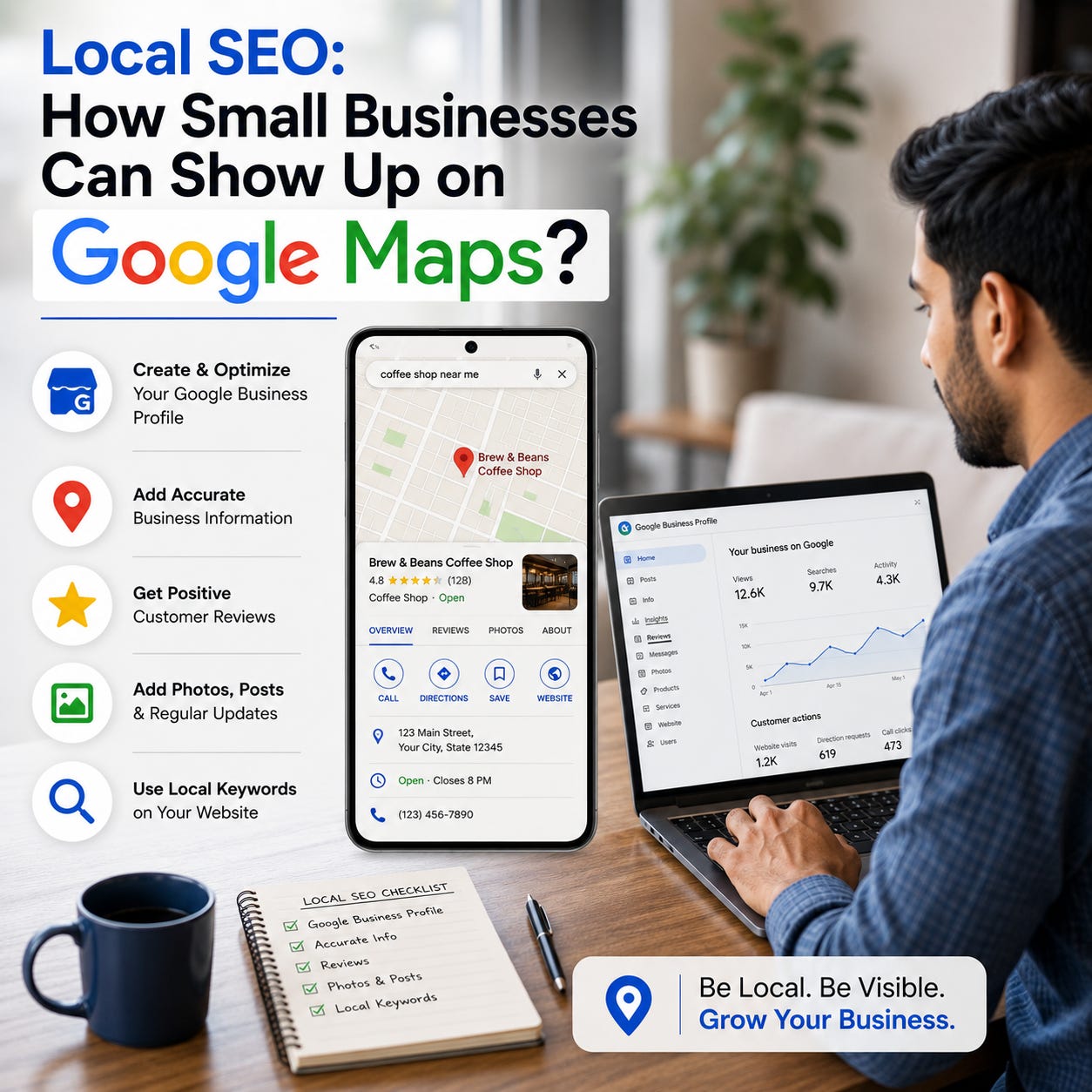
Someone nearby just searched “coffee shop near me.”
If you are running a Coffee Shop, did your business show up? Or did your competitor get the customer instead?
If you run a local business, showing up on Google Maps is one of the simplest, most powerful ways to get found, without spending money on ads. In this guide, you’ll learn exactly how local SEO works and how to get your business showing up when it matters most.
This matters even more today, because more people search on their phones the moment they need something nearby. They’re not browsing for fun. They’re ready to buy, book, or visit right now. If customers don’t see you when they’re ready to act, you lose more than just a click. You lose a real, ready-to-spend customer to whoever did show up.
What Is Local SEO, in Simple Words?
Local SEO makes it easy for Google to understand your business and connect it with local searches.
Think about searches like:
“electrician near me”
“best digital marketing company in [your city]”
“salon open now”
Google tries to show the most relevant, trustworthy, and nearby businesses for these searches. Local SEO helps Google understand your business, its relevance, and why it belongs in local search results.
Unlike traditional SEO, local SEO focuses less on your website and more on helping your business appear where local customers are searching.
Why This Matters So Much for Small Businesses?
Big brands can afford expensive ads. Small businesses often can’t compete on ad budget alone.
Local SEO levels the playing field because:
It’s mostly free
It targets people actively searching for what you offer
It builds long-term visibility, not just short bursts of traffic
It works even if you don’t have a website yet
Many businesses struggle to grow simply because they’re invisible in local search results, which is one of the quiet reasons behind why businesses fail at online marketing. Customers are searching for them. They just can’t be found.
The frustrating part is that most of this is completely fixable, often in under an hour. Unlike building a website from scratch or running a paid ad campaign, local SEO mostly involves filling out information accurately and keeping it up to date. It rewards attention to detail more than technical skill.
Steps to Get Your Business Showing Up on Google Maps
Step 1: Get Your Business Listed and Verified on Google
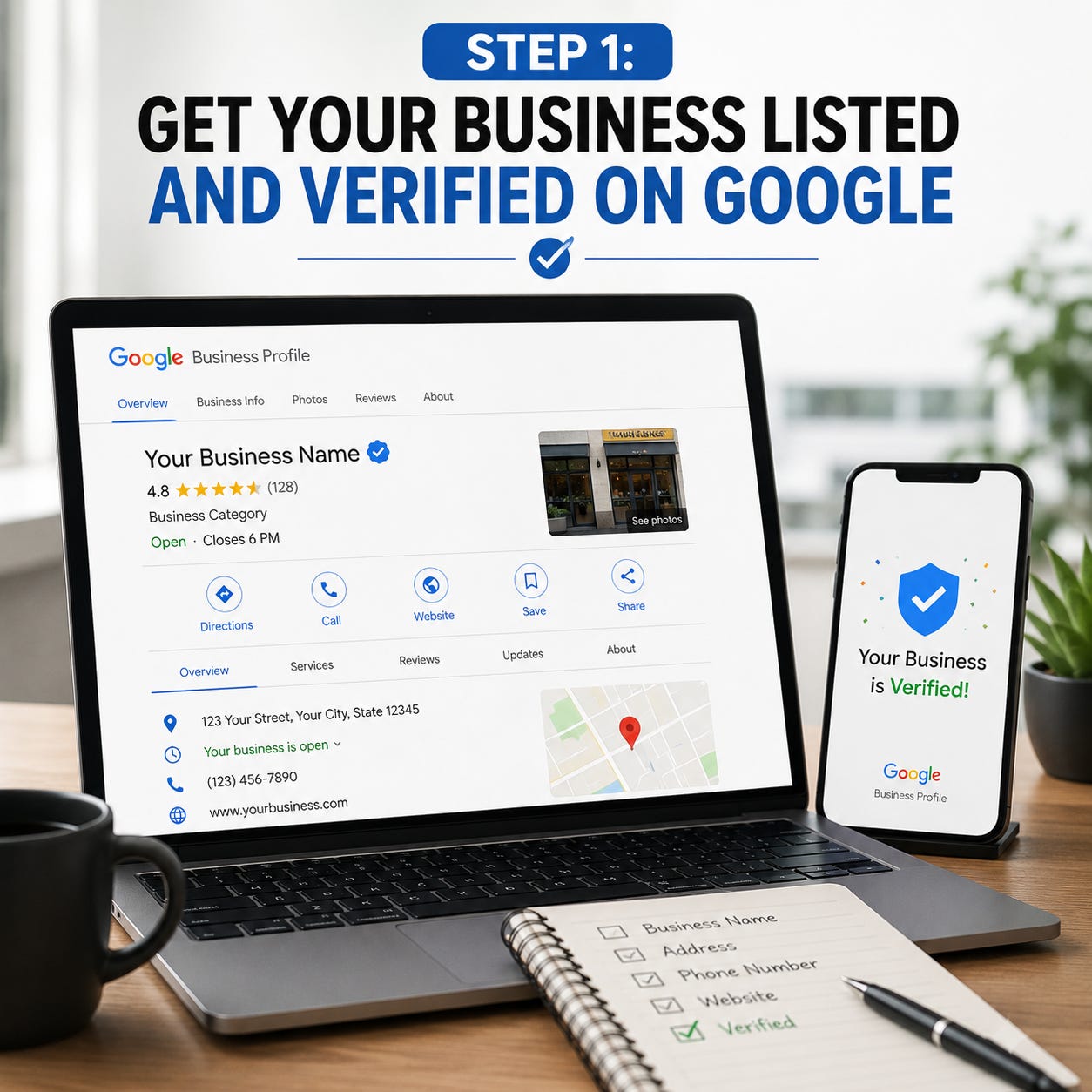
This step plays a crucial role in how your business performs in local search.
Your Google Business Profile (formerly Google My Business) is what controls how your business appears on Google Maps and in local search results.
To set it up properly:
Go to Google Business Profile and claim your business listing
Verify your business through phone, video, or postcard
Make sure your business name, address, and phone number are accurate
Choose the most accurate business category
This profile is completely free, yet many small businesses either haven’t claimed it or have left it half-finished, missing out on free visibility every single day.
Once verified, don’t just leave it sitting there. Google favours profiles that are actively maintained over ones that were set up once and forgotten. Treat this profile the way you’d treat a shop window: worth checking and updating regularly, not something you set up once and ignore for years.
Step 2: Keep Your Information Accurate and Consistent
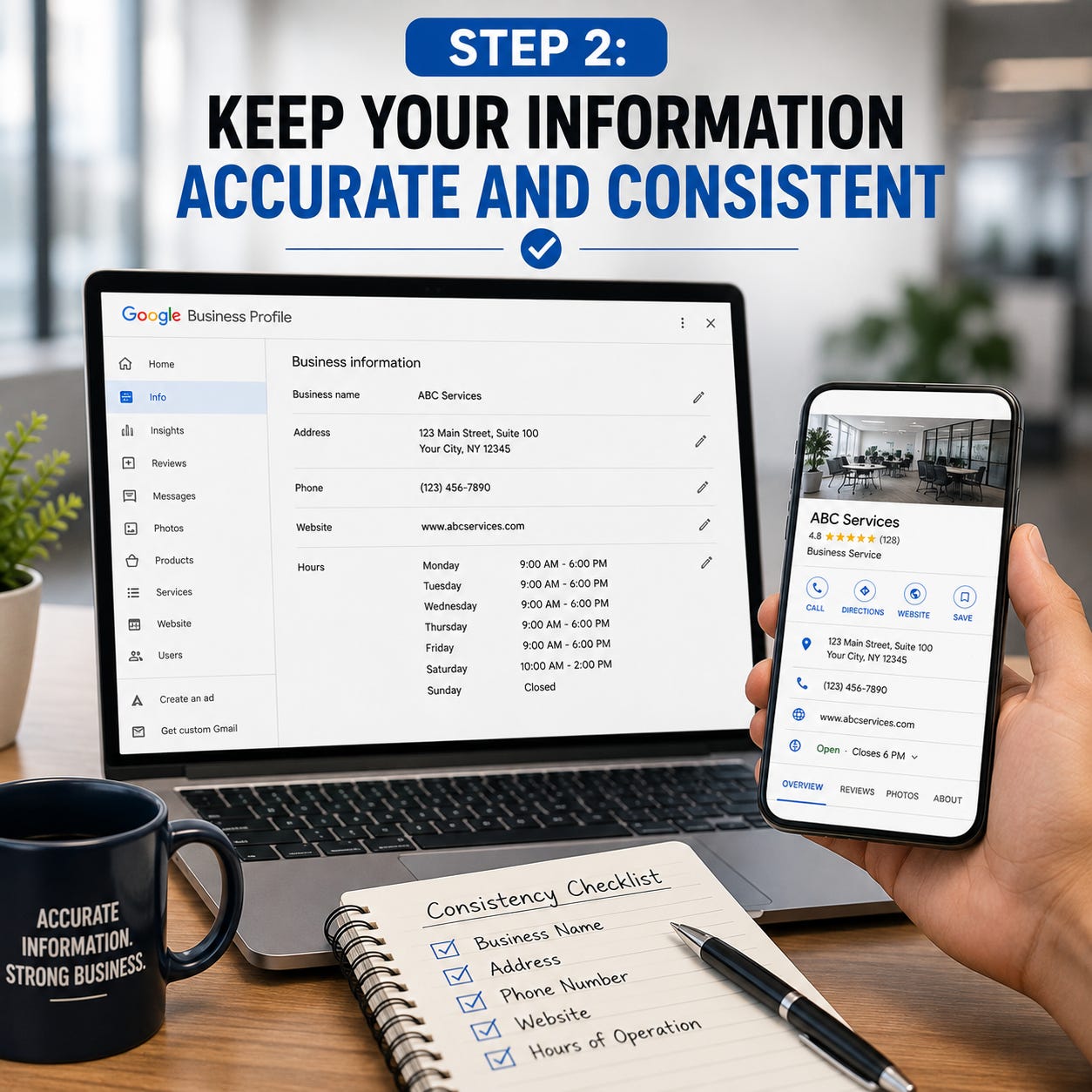
Google rewards businesses that look trustworthy and consistent.
Make sure your business details match exactly across:
Your Google Business Profile
Your website
Your social media pages
Any online directories you’re listed on
Inconsistent information, such as a different phone number on your website than on your Google listing, confuses both Google and customers. Even small mismatches can quietly hurt your local ranking.
Step 3: Choose the Right Business Categories
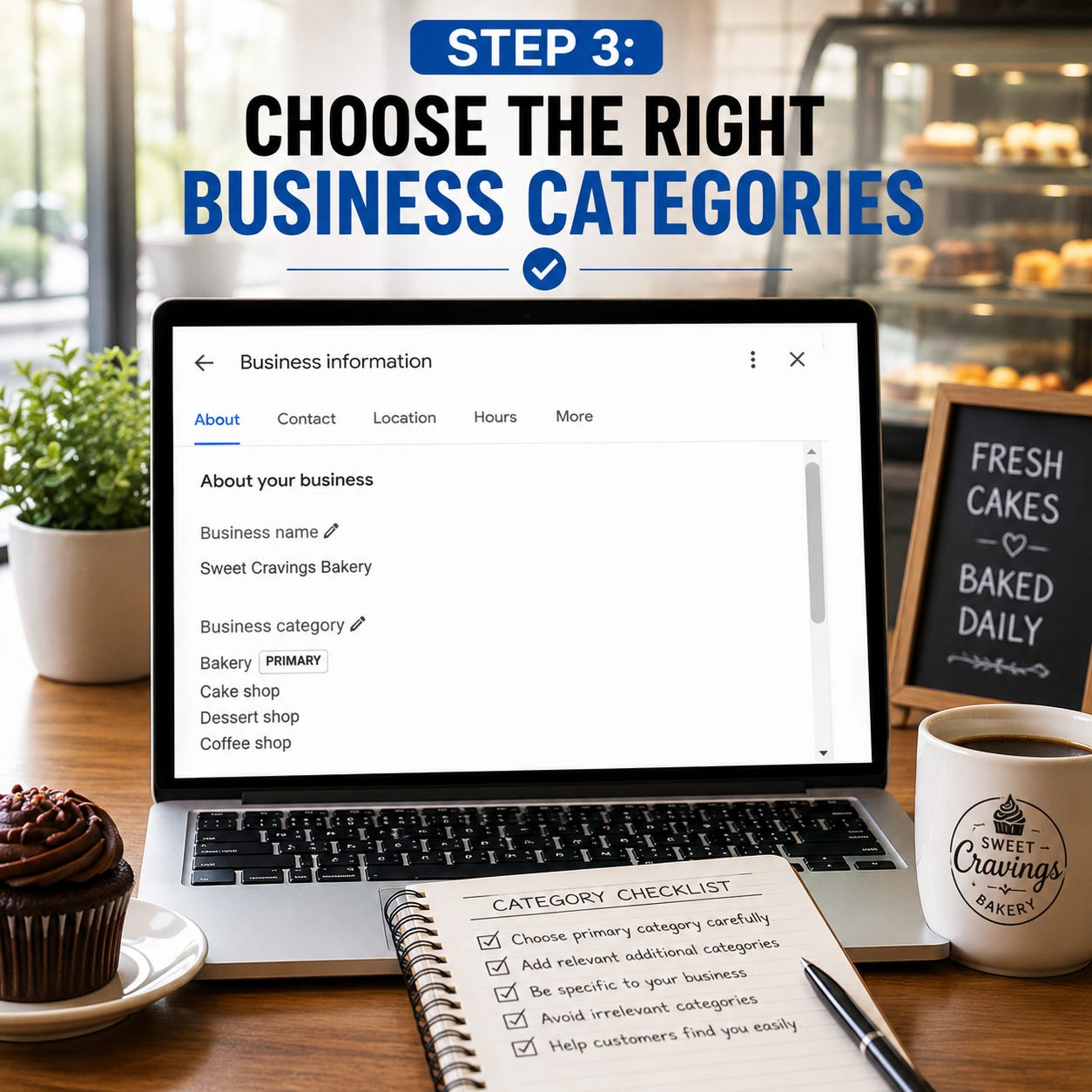
Many businesses pick a vague or incorrect category, which hurts their visibility for relevant searches.
Tips for choosing categories:
Pick the category that best reflects what your business primarily offers
Add secondary categories only if they’re genuinely relevant
Avoid stuffing unrelated categories just to appear in more searches
For example, a business that sells homemade cakes should choose “Bakery,” not just “Restaurant.” Being specific helps Google match you to the right searches.
Step 4: Add Photos That Build Trust
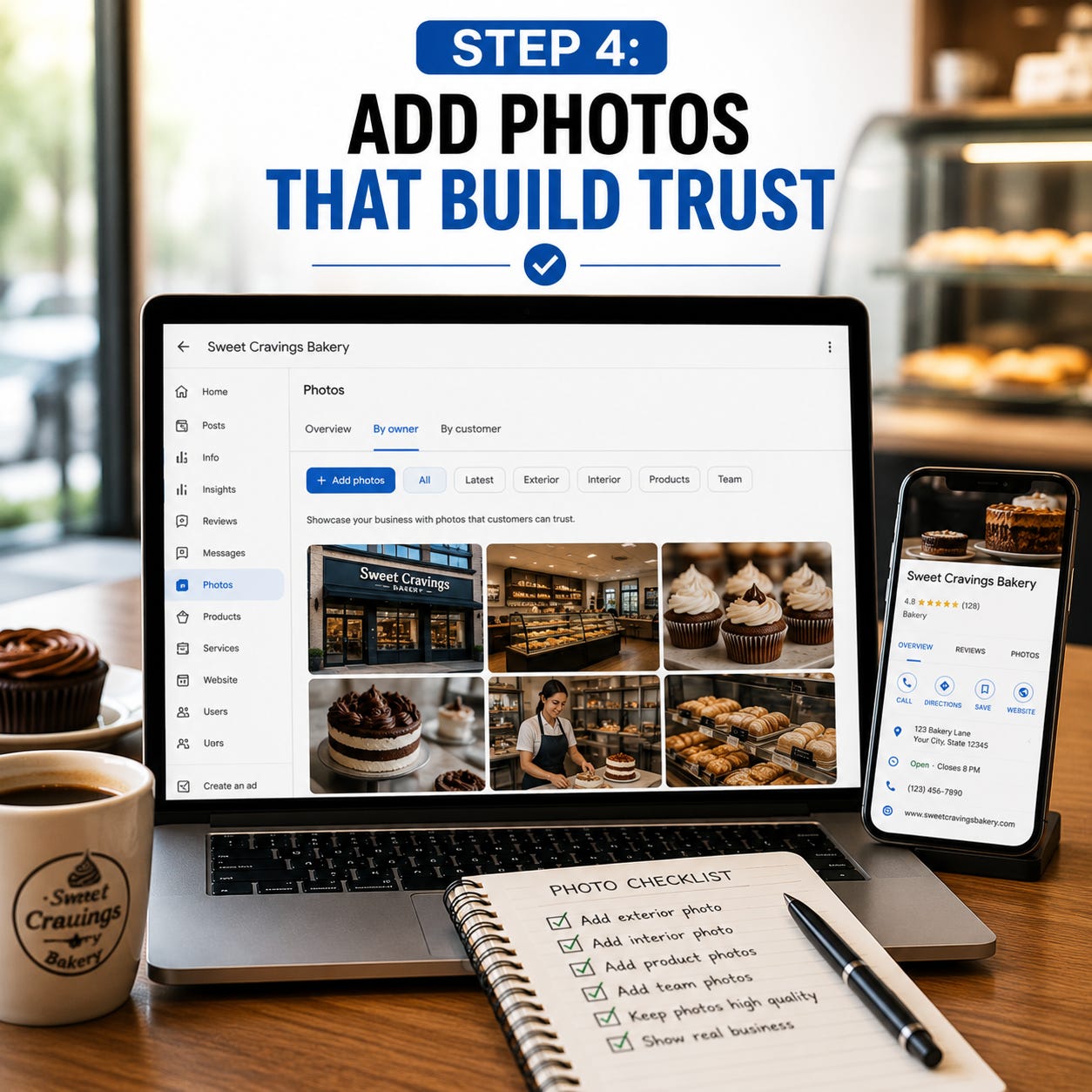
Photos play a bigger role in local SEO than most business owners realise.
Add clear, high-quality photos of:
Your storefront or workspace
Your products or services
Your team, if appropriate
Customers using your product or service (with permission)
Businesses with regularly updated photos tend to appear more active and trustworthy, both to Google and to potential customers scrolling through search results.
Step 5: Get Genuine Customer Reviews
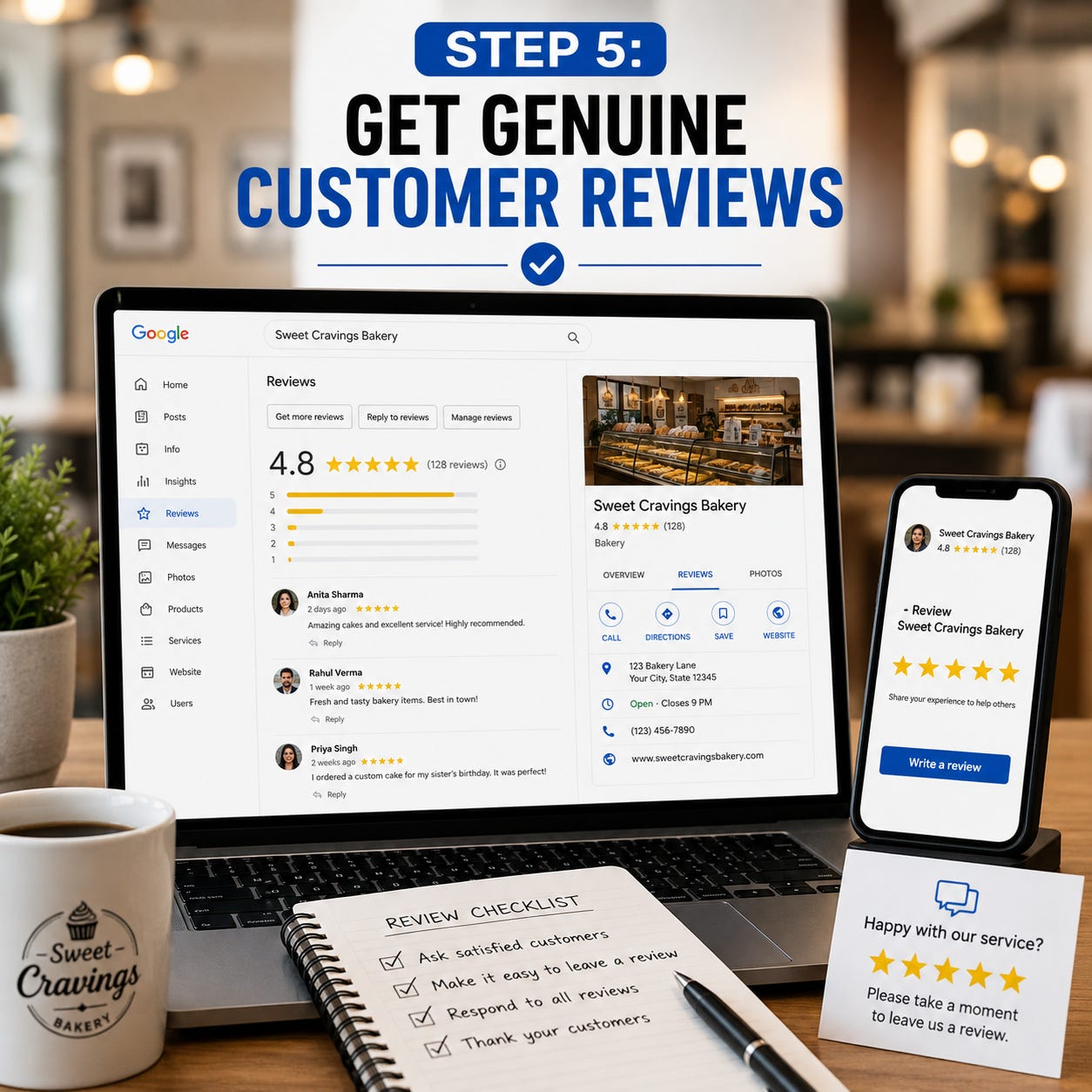
Reviews are one of the strongest local SEO signals, and also one of the most persuasive things a potential customer will read before choosing you.
How to get more reviews:
Ask happy customers directly, right after a good experience
Send a simple link making it easy to leave a review
Never ignore reviews. Respond to both positive and negative feedback professionally
Never buy fake reviews. It can get your listing penalised or removed
This connects closely to a bigger truth about business today. Trust has become the real currency businesses compete on, and reviews are one of the clearest, most visible signals of that trust, right there on your Google listing for anyone to see.
It’s also worth understanding how customers actually behave before responding to a negative review emotionally. Someone reading your listing is often at an early stage of deciding whether to trust you at all. Mapping this out through the lens of a customer buying journey from awareness to purchase helps you see that a calm, professional reply to a bad review can actually build more trust than having no negative reviews at all.
Step 6: Use Keywords Naturally in Your Profile
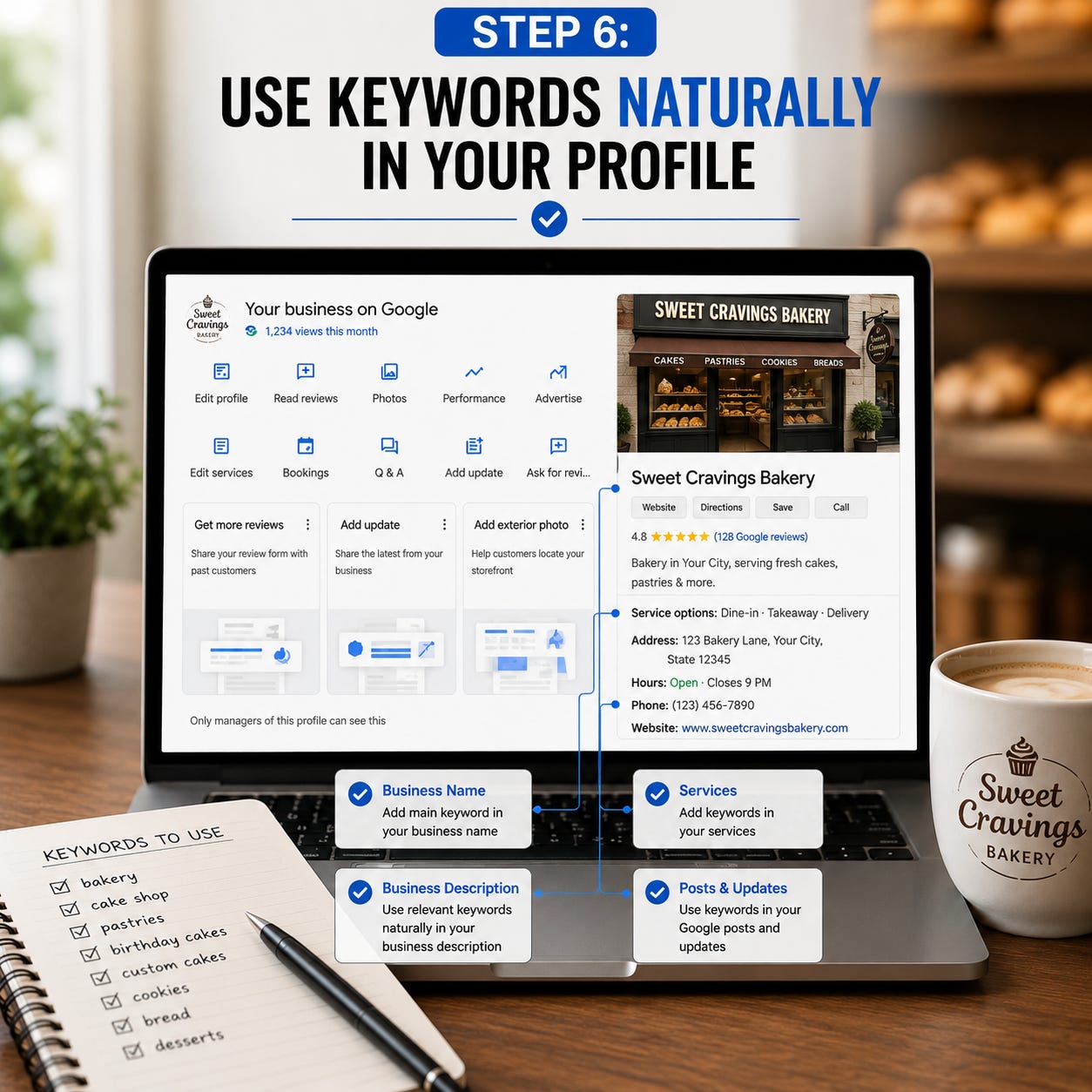
Just like a website, your Google Business Profile benefits from relevant keywords, but only when used naturally.
Where to include keywords:
In your business description
In service or product descriptions
In posts and updates you publish through your profile
Avoid keyword stuffing. Write for real customers first, and let relevant, natural keywords support that writing rather than replace it.
If you want to understand how keywords work more broadly across your website too, this on-page SEO checklist is a helpful companion resource, since local SEO and website SEO often work best together.
Step 7: Build Local Citations
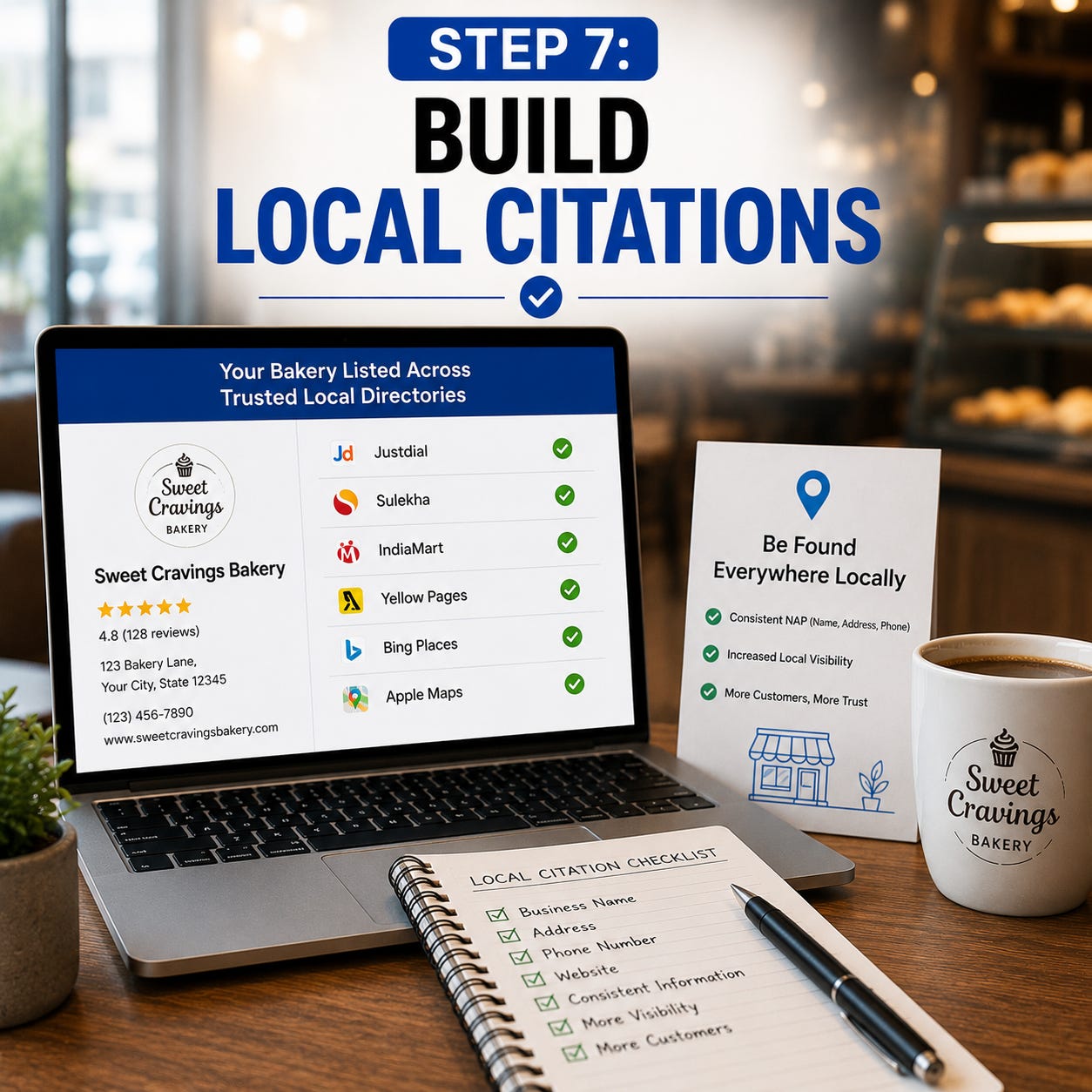
A citation is any online mention of your business name, address, and phone number, even without a link.
Good places to build citations:
Industry-specific listing sites
Local news or community websites
Chamber of commerce or local association listings
The more consistent, accurate mentions your business has across the web, the more Google trusts that your business is real, active, and location-accurate.
Step 8: Encourage Local Engagement
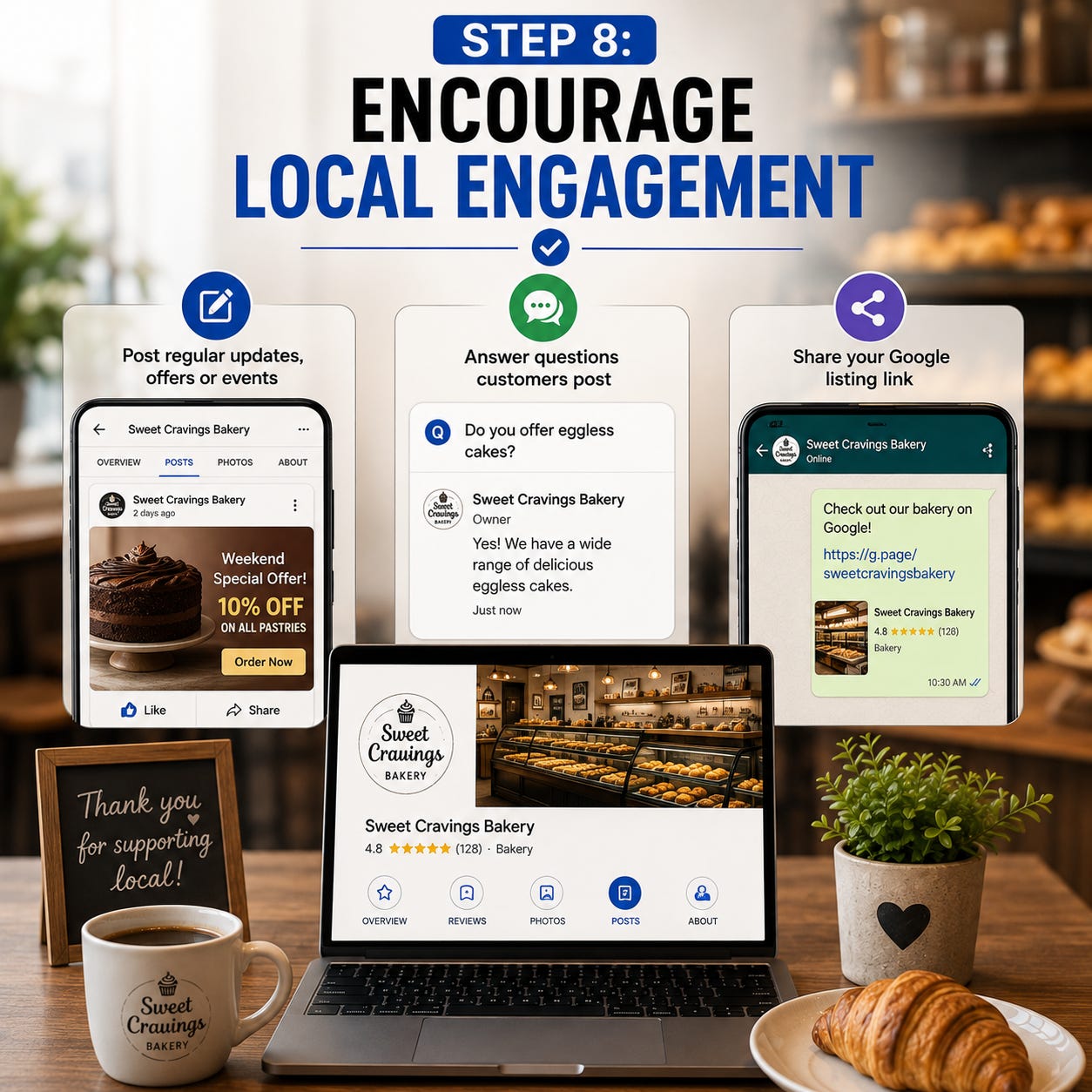
Google also looks at how people interact with your business online, not just what’s written on your profile.
Ways to encourage engagement:
Post regular updates, offers, or events through your Google Business Profile
Answer questions customers post directly on your listing
Share your Google listing link in your WhatsApp or social media messages
If you already sell to customers over WhatsApp, it’s easy to include your Google Maps link in conversations, gently encouraging happy customers to leave a review or check your listing.
Common Local SEO Mistakes to Avoid
Leaving your profile incomplete. Every empty section is a missed opportunity to build trust.
Ignoring reviews, especially negative ones. A thoughtful response often matters more than the review itself.
Using inconsistent business information across platforms. This confuses Google and customers alike.
Forgetting to update hours during holidays or festivals. Incorrect hours frustrate customers and hurt trust.
Treating local SEO as a one-time task. It needs regular attention, not a single setup session.
Speaking of holidays, seasonal accuracy matters a lot. A well-planned festival season marketing guide can help you plan updates, offers, and working hours, so your Google listing stays accurate and relevant during your busiest times of year.
How Does Local SEO Fit Into Your Bigger Marketing Picture?
Local SEO shouldn’t be treated as a separate, isolated task. It works best as part of a bigger, simple marketing plan.
If you’re unsure how local SEO fits alongside social media, ads, and other channels, this comparison of SEO vs social media vs Google Ads can help you decide where to focus your time and budget first, based on your specific business and goals.
And if you’re building your strategy from scratch, local SEO fits naturally into a one-page marketing plan for small businesses, sitting alongside your other channels as one clear, trackable piece of your overall growth strategy.
Track Your Local SEO Progress
Local SEO isn’t something you set up once and forget. Like any marketing effort, it needs regular checking to see what’s actually working.
Simple things to track each month:
How many people viewed your Google Business Profile
How many clicked for directions or called your number
How your review count and rating are trending
Which search terms brought people to your listing
Google Business Profile shows most of this data for free, right inside your dashboard. You don’t need expensive tools to get started. Just five minutes a month spent reviewing these numbers will show you whether your efforts are paying off, and where to focus next.
A Simple Local SEO Checklist to Get Started
Here’s a quick summary you can act on today:
Claim and verify your Google Business Profile
Fill in accurate, consistent business information
Choose the right, specific business category
Add clear, high-quality photos
Ask happy customers for genuine reviews
Use natural keywords in your descriptions
Build citations across relevant directories
Post regular updates and respond to questions
Review and update your profile every month
None of these steps require a big budget. They require consistency and attention to detail, the same qualities that make any small business trustworthy in the eyes of real customers.
Local SEO isn’t complicated, but it is often ignored. And that’s exactly why it works so well for the businesses that actually put in the effort.
Every day, people nearby are searching for exactly what you offer. Whether they find you or your competitor often comes down to a few simple things: an accurate profile, genuine reviews, clear photos, and regular updates.
Start today. Claim your Google Business Profile if you haven’t already, fill it out completely, and ask your next happy customer for a review. Small, consistent steps like these are what quietly turn “near me” searches into real customers walking through your door.