

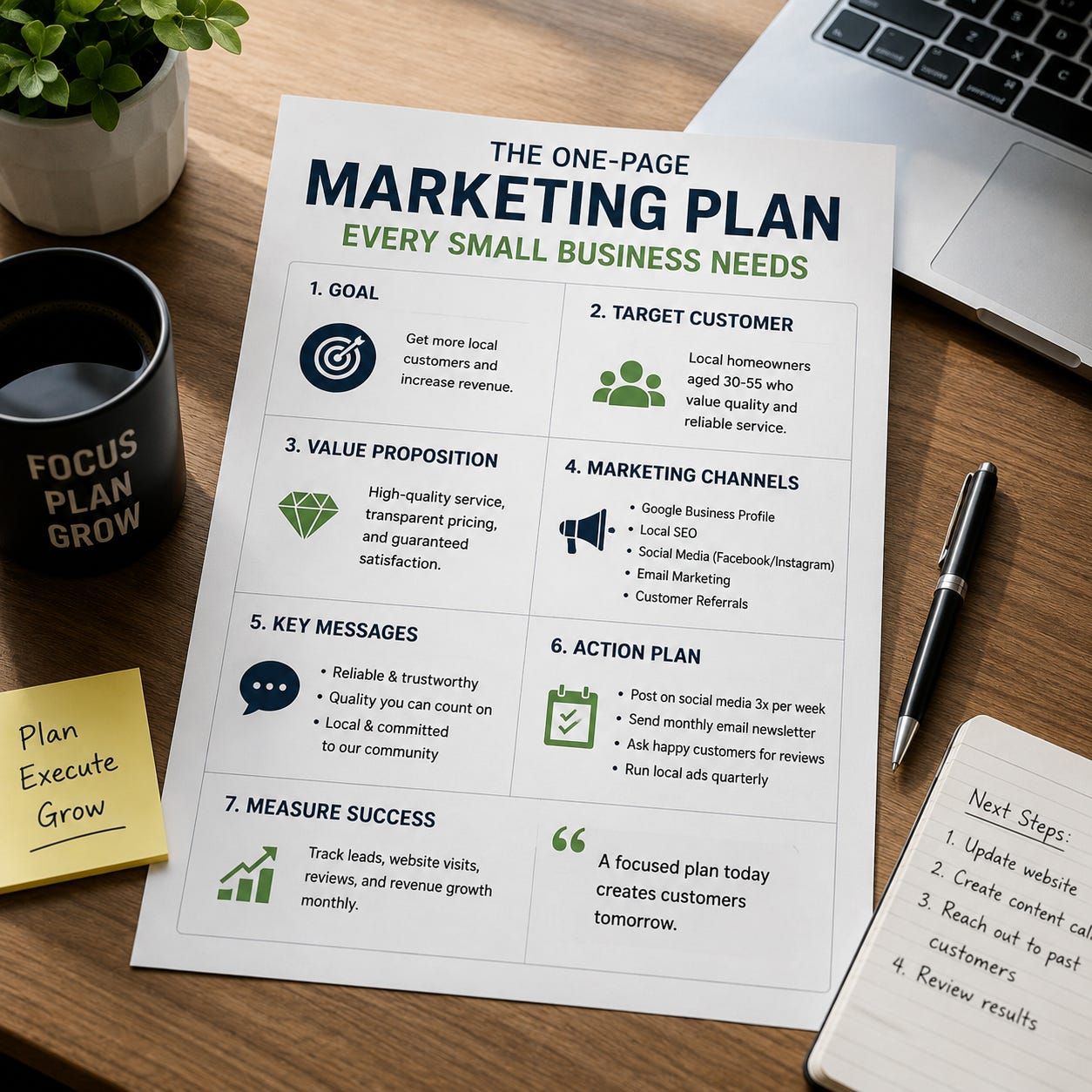
Most small business owners don’t fail because they lack a good product.
They fail because they don’t have a clear plan to tell people about it.
If you Google “marketing plan,” you’ll find 40-page templates full of jargon nobody has time for. You don’t need that. You need one page that tells you exactly who to target, what to say, and where to say it.
Here’s how to build it - in plain, simple language.
Why Do Most Small Businesses Skip Marketing Planning?
Ask any small business owner if they have a marketing plan, and most will say something like:
“I post on Instagram sometimes.”
“I run ads when I have extra budget.”
“I just wait for referrals.”
That’s not a plan. That’s guessing.
And guessing is expensive. In fact, this is one of the biggest reasons small businesses struggle to grow online - not lack of effort, but lack of direction.
Here’s the truth: most owners aren’t lazy. They’re busy. Between managing staff, handling orders, and putting out daily fires, “sit down and plan marketing” always gets pushed to tomorrow. So marketing becomes a random collection of posts, offers, and ads - with no thread connecting them.
The result? Money spent, but no real growth. Followers gained, but no sales. Effort was put in, but no clear direction.
A one-page plan fixes this. It forces clarity before you spend a single rupee. And the best part - it takes less time to make than scrolling social media for an hour.
What Goes on Your One Page
Your entire marketing plan should answer just 6 questions. Nothing more.
1. Who is your customer, really?
Not “everyone.” Be specific.
Age group
Location
Problem they’re trying to solve
Where do they spend time online?
If you skip this step, everything else falls apart. Trying to sell to “everyone” usually means you connect with no one - your message becomes too generic to grab anyone’s attention.
Understanding your customer also means understanding their journey - how they go from not knowing you exist to actually buying from you. Some people need to see you once before they trust you. Others need five touchpoints. This customer's buying journey from awareness to purchase is worth mapping out before you write a single ad, because it tells you what kind of message each customer needs at each stage.
2. What problem do you solve?
Write one sentence. Just one.
Example: “We help working parents get fresh, healthy meals without cooking.”
If you can’t say it in one line, your customers won’t understand it either.
3. Why should they trust you over competitors?
This is your edge. It could be:
Faster delivery
Better pricing
Personal service
Proof (reviews, results, case studies)
Trust matters more today than ever. Customers have endless options - what makes them pick you is rarely the lowest price. It’s the feeling that you’re reliable, honest, and won’t let them down.
In fact, trust has become the real currency businesses compete on, not just price or product. Build it with small, consistent proof: real customer photos, honest reviews, quick replies to messages, and keeping every promise you make - even small ones.
4. Where will you reach them?
You don’t need to be everywhere. You need to be where your customers already are.
Pick 1-2 channels to start:
Instagram or Facebook
Google Search / SEO
WhatsApp
Local ads or word of mouth
Trying to manage five platforms at once with a small team almost always backfires — you end up posting inconsistently everywhere instead of showing up reliably somewhere.
Not sure whether to focus on SEO, social media, or paid ads first? Here’s a simple breakdown of SEO vs social media vs Google Ads to help you decide based on your budget and goals. As a general rule, if you have time but little money, invest in SEO and organic content. If you need customers fast, paid ads work quicker - but cost more.
5. What will you say?
This is your core message - repeated everywhere.
Keep it simple:
One headline
One promise
One call to action (“Book now,” “Order today,” “Message us on WhatsApp”)
Consistency beats creativity here. Say the same thing everywhere for 90 days before you change it.
6. How will you measure it?
Pick 2-3 numbers to track weekly:
Number of inquiries
Number of sales
Cost per customer
If a number isn’t moving, that’s your signal to change something - not everything.
A Simple Example
Let’s say you run a small bakery.
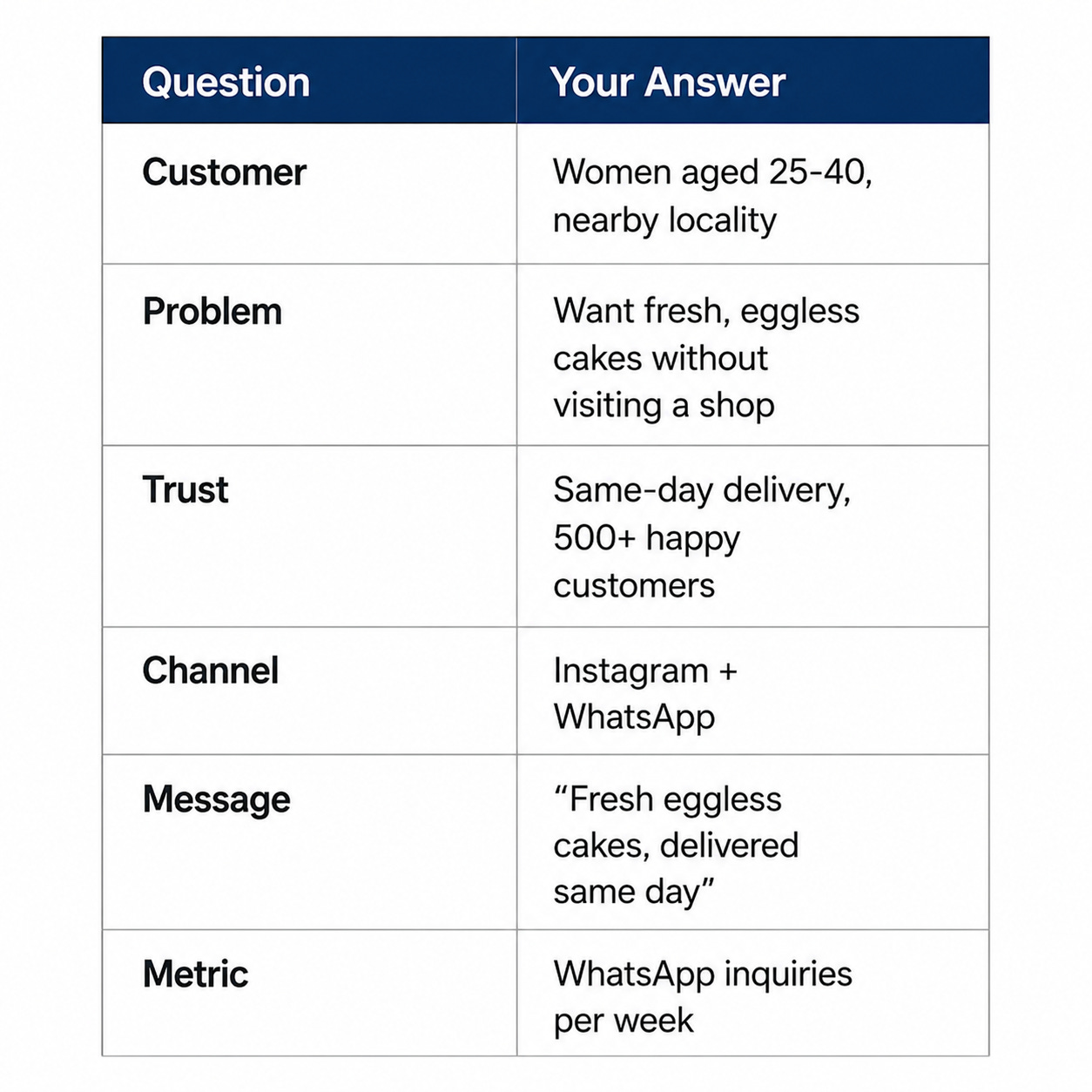
That’s it. That’s a real marketing plan - on one page.
Common Mistakes to Avoid
When you target everyone, your message ends up connecting with no one.
Being on every platform. You’ll burn out and post inconsistently, which hurts more than not posting at all.
Change your message every week. People need repetition to remember you. Give your message time to sink in before you swap it.
Skipping measurement. Without numbers, you’re just hoping. Numbers tell you the truth, even when it’s uncomfortable.
Don’t blindly copy your competitors. What works for them may not work for your audience, budget, or business. Let your one-page plan guide your decisions.
If you’re starting from scratch with almost no budget, don’t worry - a zero-cost digital marketing strategy for small businesses can still get you your first customers while you figure this plan out.
Review It Monthly, Not Just Once
A marketing plan isn’t a one-time document you write and forget. Set a reminder to revisit your one page every 30 days and ask:
Did our message stay consistent?
Which channel brought the most inquiries?
What number moved - and what didn’t?
Does our “why trust us” answer still hold true?
Small tweaks each month compound into big results over a year. This is exactly how bigger brands stay sharp - not by rewriting their whole strategy constantly, but by refining it in small, steady steps.
Marketing doesn’t need to be complicated. It needs to be clear.
One page. Six questions. Reviewed every month.
That’s more powerful than a 40-page plan sitting unused in a folder - because a plan only works if you actually use it.
Start today - grab a blank page, answer the six questions above, and you’ll have more clarity than most businesses ever get. Your competitors are still guessing. You won’t be.