

Take a quick look around you. Chances are, someone around you is looking at their phone.
That is why mobile marketing matters. Your customers are not sitting at a desktop waiting for your ad. They are scrolling, searching, chatting, and shopping from the phone in their hand, all day long.
If your business is not showing up on that small screen, you are invisible to a huge part of your market.
The good news? Mobile marketing is easy to start, affordable, and suitable for businesses of any size, from a convenience store to a growing brand.
In this guide, you will learn:
What mobile marketing really is
How it helps you reach more customers
The best mobile channels to use
Mistakes to avoid
A simple plan you can start this week
What Is Mobile Marketing?
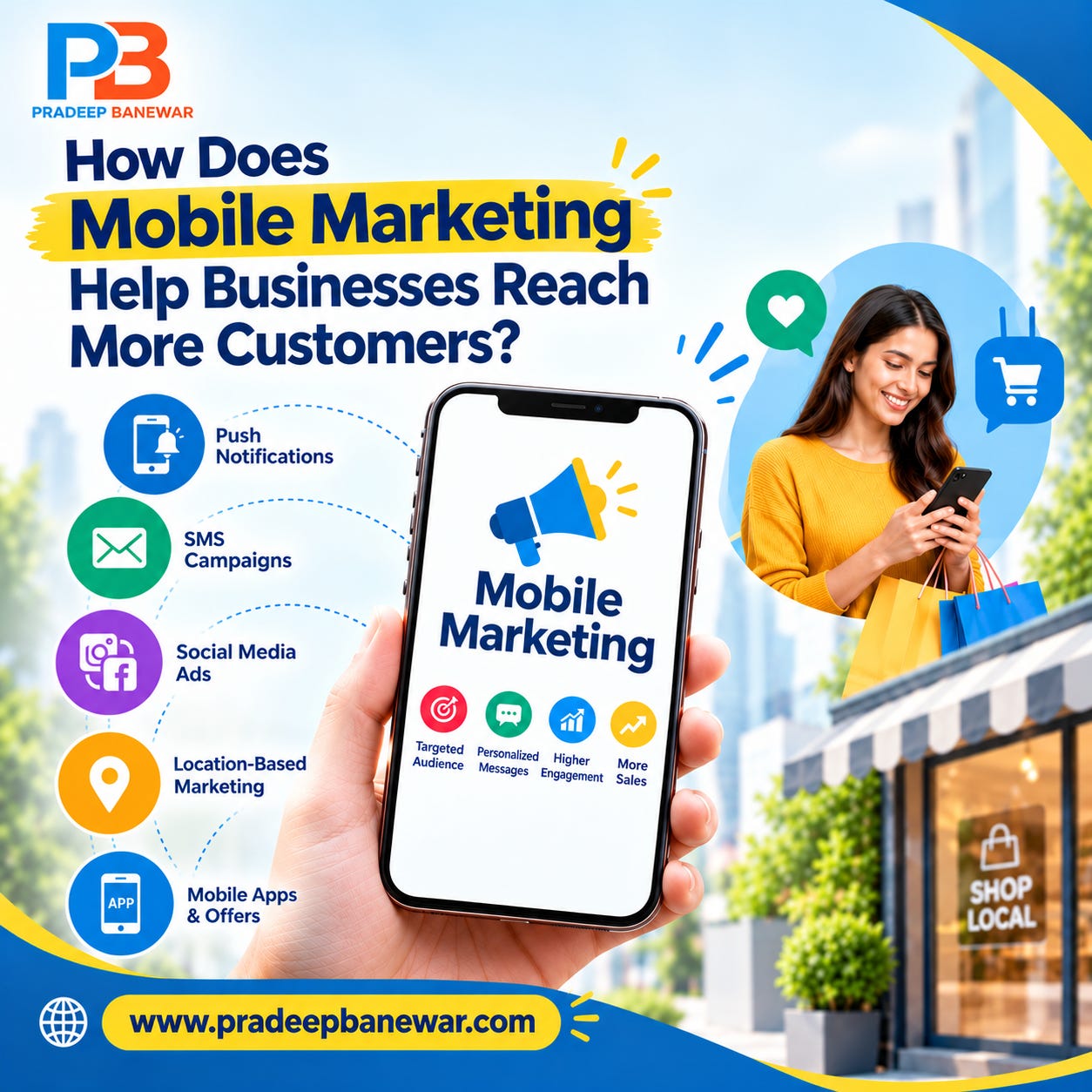
Mobile marketing means advertising your business to people on their mobiles.
It is a group of methods, such as:
Text messages (SMS)
WhatsApp and other messaging
Social media posts and ads
Mobile-friendly websites
Local search and Google Maps
Push notifications and apps.
Short videos
The idea is simple: meet people where they already spend their time and give them an easy way to find you, trust you, and buy from you.
Why Mobile Marketing Matters So Much Today?
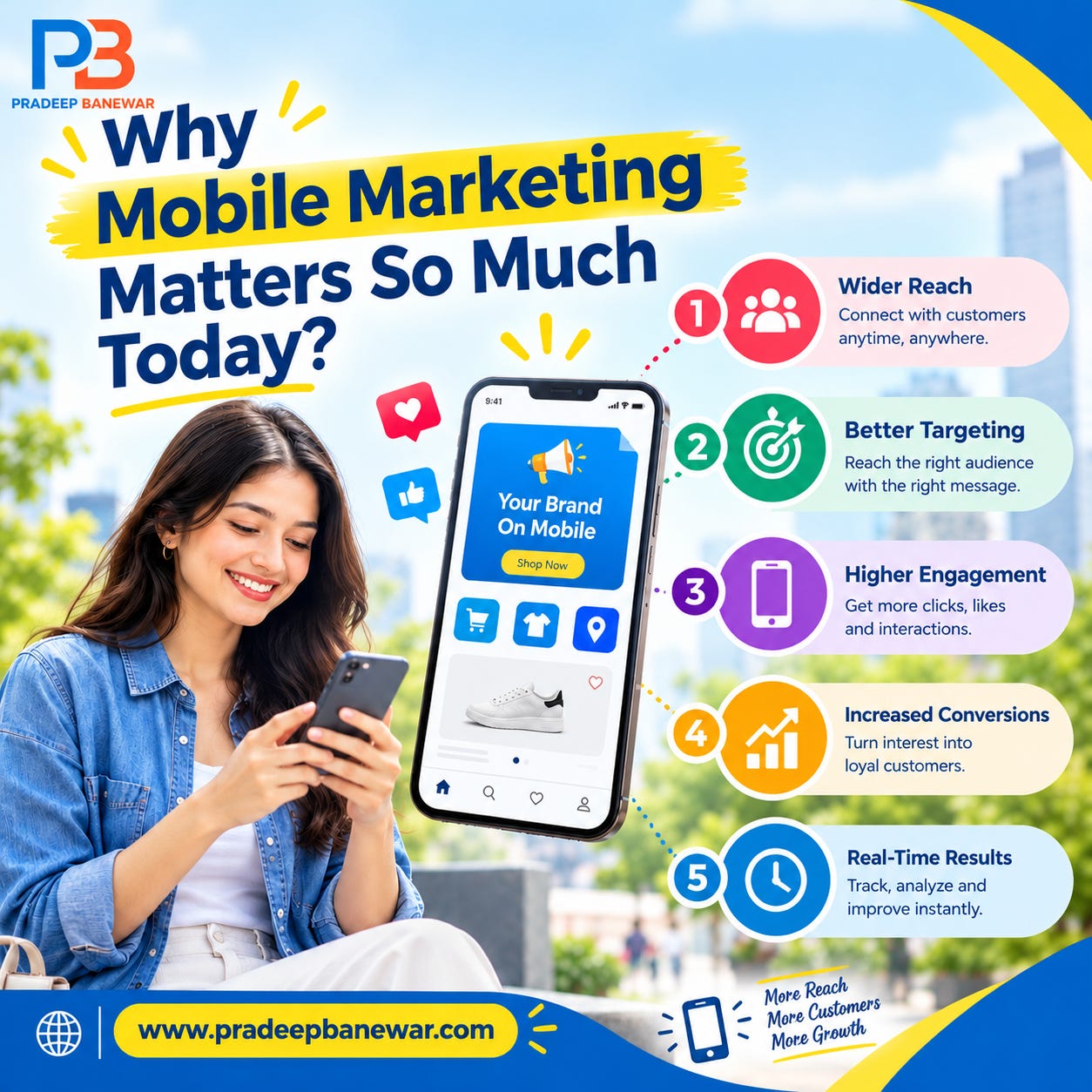
Think about how you use your own phone. You check it when you wake up, during breaks, while travelling, and before you sleep.
Your customers do the same. For many people, the phone is the first place they look when they need something.
People search on the go. They look for “near me” services while standing outside a shop.
Decisions happen fast. A customer who finds you on mobile can call, message, or visit within minutes.
Attention is on the phone. Email on a laptop is often ignored, but a message on a phone is usually seen quickly.
Simply put, if you want attention, you have to go where the attention is. Right now, that is mobile.
1. It Puts You in Front of Customers All Day
A billboard works only when someone drives past it. A newspaper ad works only when someone opens the paper.
Mobile marketing works at any time of day, in any place.
A customer might see your Instagram reel in the morning, get your WhatsApp offer at lunch, and search for your shop on Google Maps in the evening. That is three chances to win a customer in one day.
2. SMS Gets Your Message Read
Text messages may sound old-fashioned, but they still work very well.
Why? Because people tend to open texts quickly. No complicated algorithms are deciding whether your message gets seen.
Use SMS for:
Sale and discount alerts
Appointment reminders
Order and delivery updates
Festival and seasonal offers
Payment reminders
Quick tip: Keep each message short, clear, and useful. One offer, one action, one link. Never spam people, or they will simply block you.
3. WhatsApp Turns Chats Into Customers
In India and many other countries, WhatsApp is not just an app. It is how people talk, share, and even shop.
For businesses, that is a huge opportunity. You can:
Share product photos and prices.
Answer questions instantly
Send offers to interested customers.
Take orders and confirm payments.
Follow up after a sale.
Best of all, customers feel comfortable on WhatsApp. It feels personal, not pushy.
If you want to go deeper, this detailed WhatsApp marketing guide will teach you how to set it up the right way.
No website yet? No problem. Many small businesses sell on WhatsApp without a website.
4. Social Media Reaches People Where They Scroll
Most social media use happens on phones. That makes platforms like Instagram, Facebook, YouTube, and LinkedIn powerful mobile marketing tools.
What you can do:
Post helpful tips and behind-the-scenes content.
Run low-budget ads aimed at the right city, age, and interests.
Go live to answer questions.
Share customer reviews and results.
Use stories to show daily updates.
The secret is to be useful first and sell second. When people learn something from you, they begin to trust you.
Also remember that more followers do not always mean more sales. What matters is having the right people paying attention. This idea is explained well in why your best customers are not always your active followers.
5. Local Search Brings Nearby Customers to Your Door
When someone types “best dentist near me” or “sweet shop open now,” they are usually ready to act.
These people do not want to read long articles. They want an address, a phone number, and proof that you are good.
To show up in these searches:
Claim your Google Business Profile. It is free.
Name, address, phone number, and opening hours must be correct.
Upload real photos. Show your shop, your team, and your products.
Collect reviews. Ask happy customers to leave a rating.
Reply to every review. It shows you care.
For shops, clinics, salons, restaurants, and service providers, this single step can bring in a steady stream of new walk-in customers.
6. A Mobile-Friendly Website Stops You Losing Visitors
Imagine a customer clicking your link, waiting ten seconds for the page to load, then pinching and zooming to read tiny text. What do they do? They leave.
And they probably go to your competitor.
A good mobile website should:
Load fast
Have big, easy-to-read text.
Show your phone number and a “Call” or “WhatsApp” button at the top.
Be simple to scroll with one thumb.
Have a short, easy contact or order form
If people can’t use your site on a phone, all your other marketing efforts are wasted. Fix this early.
7. Short Videos Grab Attention Fast
Short videos are one of the quickest ways to be noticed on mobile. Reels, YouTube Shorts, and similar formats are made for phone screens.
Video ideas for any business:
Show how your product is made.
Answer one customer question in 30 seconds.
Share a quick tip
Show a before-and-after result.
Introduce your team
When people see your face and hear your voice, you stop being just a business name. You become a real person they can trust.
8. Push Notifications and Apps Keep You Top of Mind
If you have your own app, push notifications let you send short alerts straight to a customer’s screen.
They work well for:
Flash sales
Reminders for items left in a cart
New product launches
Loyalty points updates
But do not overdo it. Too many alerts can make people frustrated and cause them to disable alerts or uninstall the app. Send fewer messages, and make each one worth opening.
Not every business needs an app. For many small businesses, WhatsApp, SMS, and social media are enough to begin with.
9. Mobile Marketing Builds Trust
Here’s something many people miss: reaching more customers is not only about being seen. It is about being believed.
Mobile makes trust easier because communication is quick and personal. A fast reply, a helpful voice note, or a friendly follow-up message shows people you are reliable.
Trust grows when you:
Answer messages quickly
Keep your promises on price and delivery.
Follow up after the sale.
Trust also leads to referrals, and referrals are the most affordable customers you can acquire. To understand why this matters, why customer trust is the new currency in business.
10. It Lets You Personalise Your Message
Mobile tools help you speak to people as individuals, not as a faceless crowd.
You can:
Use the customer’s name in messages.
Send offers based on what they bought before
Wish them on birthdays and anniversaries.
Group customers by interest or location
A message like “Hi Neha, your favourite coffee is back in stock” works far better than “Big sale! Buy now!”
Personal messages make people feel noticed. And people who feel noticed come back.
11. It Is Affordable and Easy to Measure
Traditional advertising can be expensive, and you often cannot tell what worked.
Mobile marketing is different. You can even start with a small budget and see fast results.
You can track:
The total number of people who clicked on your link
How many messages you received
How many calls came in
Which post or ad brought the most customers
This helps you stop spending on what does not work and do more of what does. For small businesses with limited money, that is a big advantage.
Common Mobile Marketing Mistakes to Avoid
Even good ideas fail when they are done the wrong way. Watch out for these:
Spamming customers. Too many messages lead to blocks and unfollows.
Ignoring replies. A slow answer can lose a sale.
Having no clear goal. Decide if you want calls, orders, visits, or sign-ups.
Using a slow, clunky website. Visitors leave within seconds.
Copying others without a plan. What works for one business may not work for yours.
Not tracking results. If you don’t measure, you can’t improve.
Many businesses fail at online marketing because they do things randomly, without a system.
A Simple 5-Step Mobile Marketing Plan
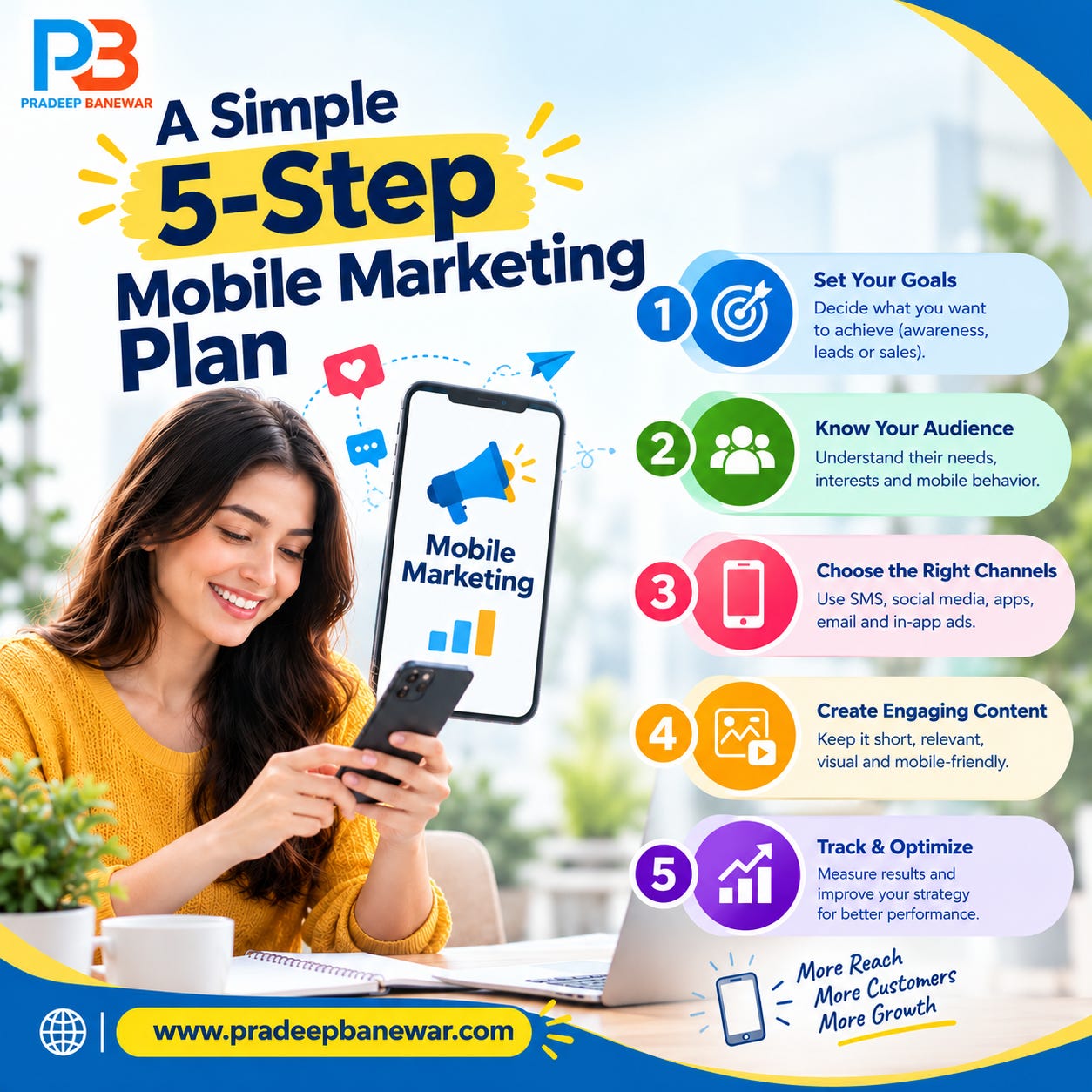
Feeling overwhelmed? Don’t be. You do not need to do everything at once. Start here:
Step 1: Pick one clear goal. For example: “Get 30 new customers this month.”
Step 2: Know your customer. Who are they? What do they search for? Which apps do they use most?
Step 3: Choose two or three channels. For most small businesses, WhatsApp, Google Business Profile, and Instagram are a great start.
Step 4: Create helpful content and offers. Post tips, show results, and give people a reason to contact you.
Step 5: Track and improve. Check every week what worked. Keep it, and drop what did not.
Need help putting everything on paper? This one-page marketing plan for small businesses is a handy way to organise your ideas.
Real-Life Example
Let’s say Ravi runs a small bakery in a mid-sized city.
Here is what he does:
He sets up his Google Business Profile with photos and opening hours.
He creates a WhatsApp Business account with his cake menu.
He posts short reels showing cakes being decorated.
He sends a festival offer to customers who ordered before
He asks happy customers to leave a review.
Within a few weeks, more people find his bakery on Maps, more orders arrive by chat, and returning customers share his number with friends.
Ravi did not need a big budget. He just used mobile tools with a clear plan.
You can do the same.
Quick Checklist
Before you finish reading, check how many of these you already have:
A mobile-friendly website or landing page
A claimed and updated Google Business Profile
A WhatsApp Business account
A regular posting habit on one social platform
A way to collect customer phone numbers (with permission)
A habit of replying to messages quickly
A simple weekly review of your results