


You can have a perfect degree, top grades, and a strong resume.
And still lose out to someone less qualified.
Why? Because there’s one essential skill that few colleges teach, yet employers, clients, and recruiters expect you to have from day one.
The ability to explain your value effectively is a skill that’s easy to describe but rarely practiced.
Not shout about it. Not exaggerate it. Just explain, in simple words, what you can do and why it matters. Let’s break down the importance of this skill and the practical ways you can start strengthening it today.
This isn’t just another soft skill. It’s one of the most important skills you can develop. It quietly decides who gets shortlisted, who gets the promotion, and who gets the client, long before technical ability even enters the conversation. Most people never notice this happening, because nobody points it out directly. College prepares your knowledge. The real world evaluates how confidently and clearly you express it.
The Problem With How College Prepares You?
College teaches you subjects. It rarely teaches you how to talk about what you know.
Think about how most students prepare for interviews or job applications:
They memorise definitions and theories.
They focus on grades and certificates.
They assume good work will “speak for itself”.
But in the real world, good work rarely speaks for itself. Someone still has to explain it clearly, whether that’s in an interview, a client pitch, or a simple conversation with a manager.
This gap becomes obvious the moment people enter the job market. Many graduates struggle not because they lack knowledge, but because they cannot explain their knowledge in a way that others quickly understand and value.
It’s a strange kind of unfairness. Two candidates can have almost identical skills, but the one who explains their work clearly gets remembered, referred, and hired faster. Not because they’re more talented, but because they made it easy for someone else to see their value without having to dig for it.
What This Skill Actually Looks Like?
This skill isn’t about being the loudest person in the room. It’s much simpler than that.
It means being able to:
Explain what you do in one or two clear sentences.
Describe your strengths without sounding arrogant or unsure.
Connect your skills to what the other person actually needs.
Tell a short, clear story about a result you achieved.
For example, compare these two answers to “Tell me about yourself”:
Weak answer: “I did my degree in marketing and worked on some projects during college.”
Strong answer: “I helped a local business grow their Instagram engagement by 40% during my final year project, and I’m looking to bring that same approach to a full-time marketing role.”
Same person, same experience. But one answer is forgettable, and the other is memorable.
Why Employers and Clients Care So Much About This?
From a hiring manager’s side, this skill matters more than people realise.
They meet dozens of candidates with similar degrees.
They don’t have time to “figure out” your value.
They trust people who can explain themselves clearly.
Clear communicators reduce their own workload and risk.
The same applies to clients. A freelancer or consultant who can clearly explain their process and results earns trust faster than one who says, “I’m good at what I do.”
This is exactly why your LinkedIn profile matters so much. It’s often the first place this skill gets tested, long before an interview even happens. A profile that clearly explains your value in a few lines will always outperform one filled with vague buzzwords.
Recruiters often spend less than a minute scanning a profile or resume before deciding whether to look closer. In that short window, clarity wins every time. A confusing or generic description gets skipped, no matter how impressive the experience behind it might be.
Why This Skill Feels Uncomfortable at First?
Most people don’t struggle with this because they lack ability. They struggle because it feels awkward to talk about themselves.
Common thoughts that hold people back:
“Won’t this sound like bragging?”
“Shouldn’t my work just speak for itself?”
“What if I sound fake or rehearsed?”
Here’s a helpful reframe: explaining your value clearly is not bragging. Bragging is exaggeration. Clear communication is simply honesty, delivered well.
Once you separate these two ideas in your mind, this skill becomes much easier to practice without feeling uncomfortable.
How to Build This Skill, Step by Step?
Step 1: Get Clear on Your Own Value First

Before you can explain your value to others, you need clarity yourself.
Ask:
What specific problems can I solve?
What results have I created in the past, even small ones?
What do people usually thank me for or come to me for help with?
Write your answers down. Most people have never actually done this simple exercise, which is exactly why they struggle to explain themselves under pressure.
Step 2: Create a Simple, Repeatable Introduction
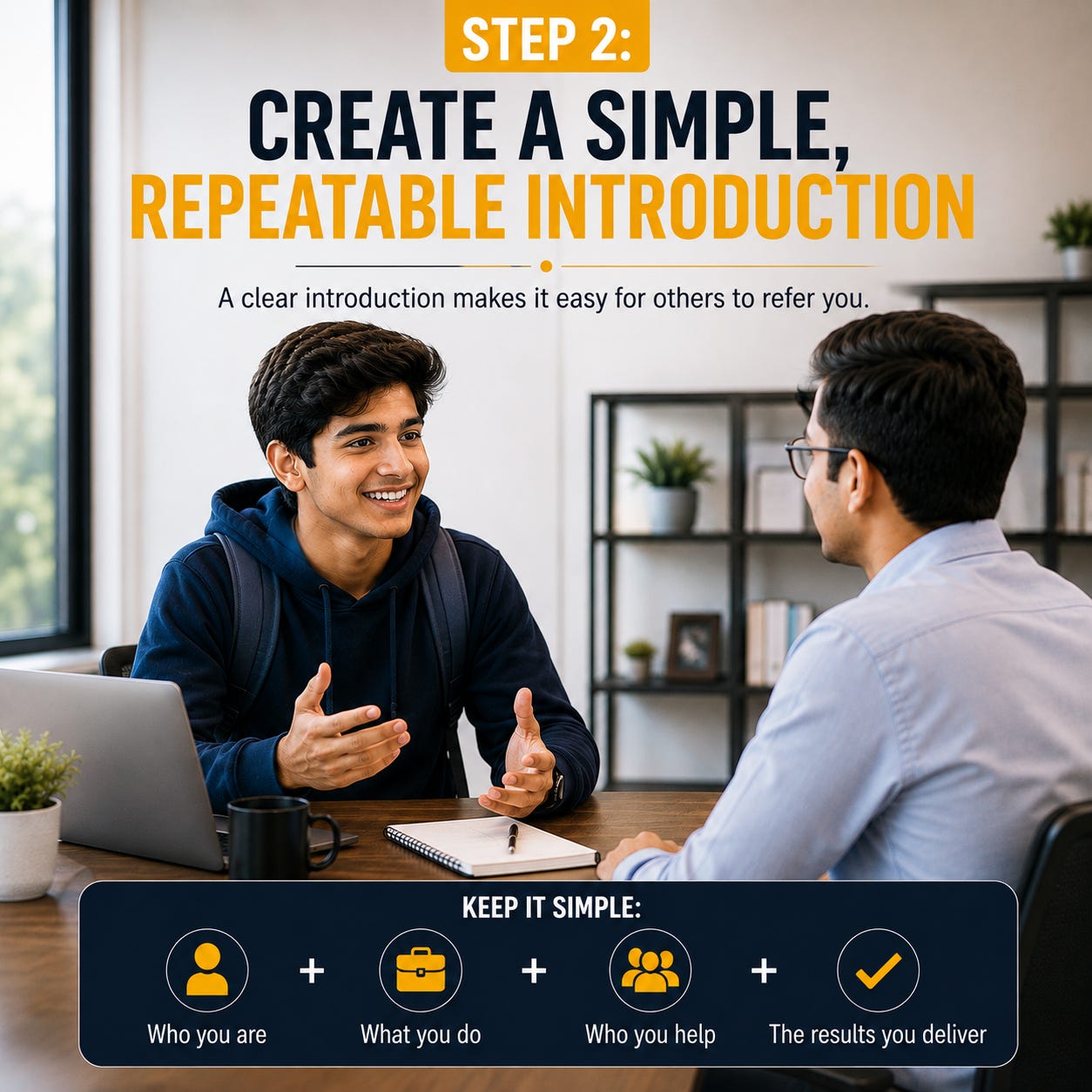
You don’t need a different answer every time someone asks what you do. Build one clear, flexible introduction you can adjust slightly depending on the situation.
A simple formula:
“I help [specific type of person] with [specific problem], and I recently [a small proof or result].”
Practice saying this out loud until it feels natural, not memorised.
Step 3: Practice Explaining, Not Just Listing

There’s a big difference between listing skills and explaining value.
Listing: “I know Excel, Canva, and social media management.”
Explaining: “I use tools like Excel and Canva to help small businesses manage their social media more efficiently, saving them hours every week.”
The second version connects your skills to a real outcome, which is far more convincing than a plain list.
Step 4: Learn to Tell Short, Simple Stories

Stories leave a lasting impression in ways that facts and lists often cannot.
A simple story structure:
What was the situation?
What role did you play?
What was the outcome?
Example: “A client’s website wasn’t getting any traffic. I rewrote their homepage content and optimised their basic SEO. Within two months, their traffic doubled.”
You don’t need a dramatic story. A simple, authentic example often has a greater impact than a large but unclear claim.
Keep a running list of these small stories somewhere- a notes app, a document, anywhere easy to access. Most people forget their own best examples the moment they need them most, simply because they never wrote them down in the first place.
Step 5: Practice in Low-Pressure Situations First

You don’t need to save this skill only for interviews or big client pitches.
Practice it in everyday situations:
Introducing yourself at a networking event
Explaining your role to a new colleague
Talking about your work at a family gathering
Writing a short, clear LinkedIn post about a recent project
Small, low-stakes practice builds real confidence, so the skill feels natural when it truly matters.
Where This Skill Matters Most?
This skill isn’t limited to interviews. It shows up everywhere in your career.
Job interviews: explaining your experience clearly and confidently
Freelancing and client work: pitching your services without sounding pushy
Performance reviews: clearly explaining your contributions and impact
Networking: leaving a memorable impression in a short conversation
Online presence: writing bios, posts, and profiles that actually communicate value
If you’re deciding between freelancing, a job, or starting your own business, this skill becomes even more important, since your income directly depends on how clearly you can communicate your value to others.
It’s one of the biggest factors that separates freelancing, employment, and business ownership, and it matters regardless of which path you choose.
This Skill Also Builds Your Personal Brand
Communicating your value clearly isn’t a one-time skill you use only during interviews. Over time, it helps establish a personal brand that people trust and remember.
Every time you explain your work clearly, whether online or offline, you reinforce how people remember and describe you. This is especially useful if you’re starting to build a personal brand, even before you’re active online. Clear communication offline naturally becomes the foundation for a stronger presence online later.
Over time, small, consistent efforts like a 90-day plan to build a brand on LinkedIn work far better when paired with this core skill, because a strong platform strategy still needs clear communication behind it to actually work.
Skills That Pair Well With This One
While this skill is powerful on its own, it becomes even stronger when combined with practical, in-demand skills.
If you’re still deciding what to specialise in, it helps to look at growing IT and digital career paths, since technical skills combined with clear communication are among the strongest combinations in today’s job market.
This also matters more as remote work becomes more common. As more work-from-home careers continue growing, the ability to communicate clearly through text, video calls, and async messages becomes even more valuable, since you often don’t get the benefit of in-person body language to support your message.
In a remote setting, your words often are the entire impression you make. There’s no hallway conversation, no shared lunch, no casual chat to build bond. Everything rides on how clearly and confidently you communicate in messages, calls, and documents, which makes this skill even more essential than it was a decade ago.
Common Mistakes People Make
Waiting until they feel “expert enough.” You can explain your value at any stage, even as a beginner.
Overcomplicating their explanation. Simple, clear language always beats jargon.
Focusing only on tasks, not results. People remember outcomes, not just what you did.
Practicing only for interviews. This skill should be part of daily habits, not a one-time preparation.
Comparing themselves to more “confident” people. Confidence in this skill comes from practice, not personality.
Building small, consistent habits around this, just like the daily habits practiced by successful entrepreneurs and marketers, turns it from an occasional effort into a natural strength over time.
Grades and degrees open doors. But this one skill, communicating your value clearly, is often what decides whether you actually walk through them.
The good news is that this skill isn’t something you’re born with. It’s built through:
Getting clear on your own value
Practicing a simple, repeatable introduction
Explaining outcomes, not just tasks
Telling short, honest stories
Practicing often, in small, everyday moments
Start small. The next time someone asks what you do, don’t just list your job title. Explain the value you actually bring. Do this consistently, and you’ll notice something interesting: opportunities start finding you, instead of you constantly chasing them.