

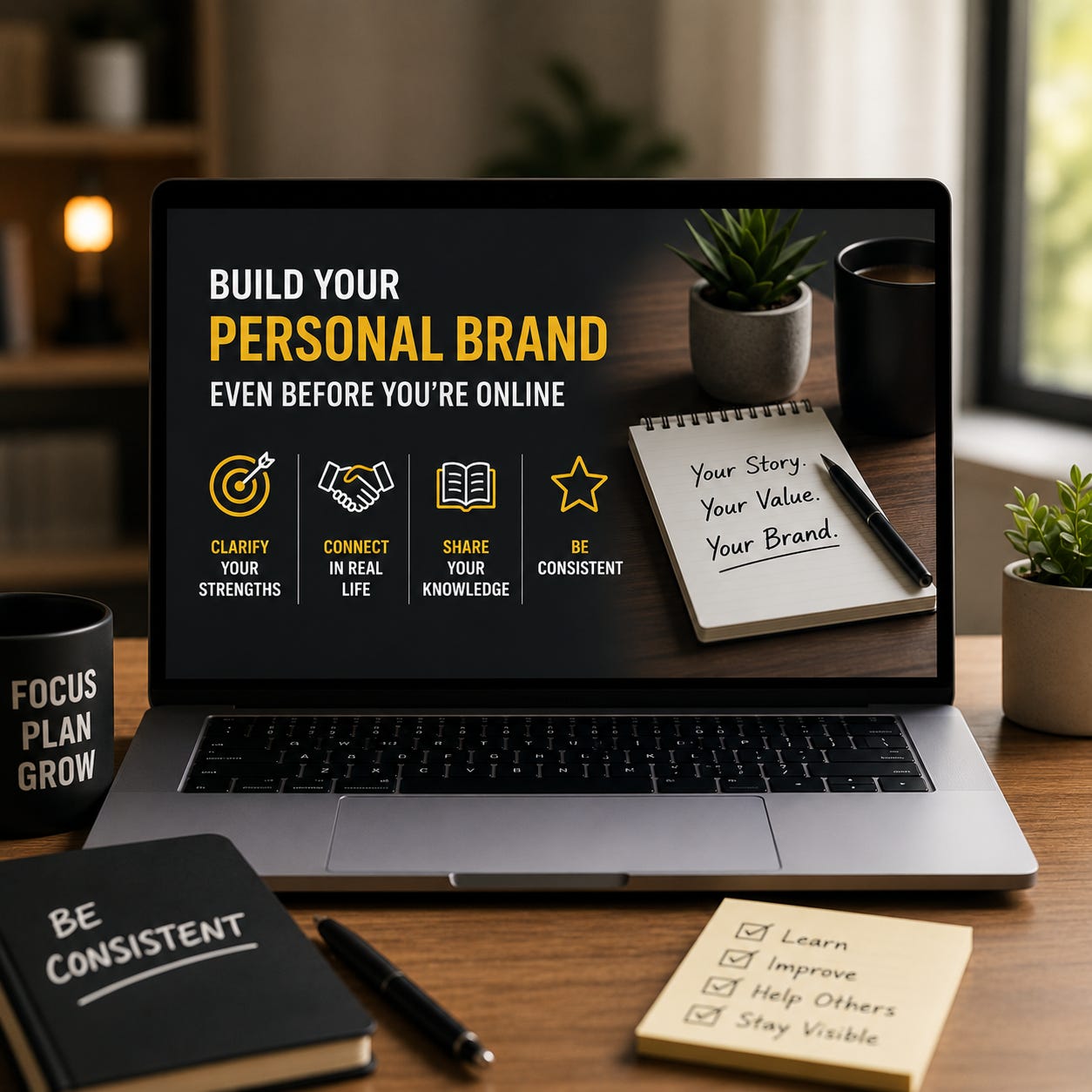
You don’t need 10,000 followers to have a personal brand.
You need clarity, consistency, and a starting point.
Most people think personal branding is something reserved for influencers, YouTubers, or people with huge social media followings. So they wait. They tell themselves, “I’ll build my brand once I have more experience,” or “I’ll post once I look more polished.”
Here’s the truth: your personal brand already exists. It’s how people describe you when you’re not in the room. The only question is whether you’re shaping it or leaving it to chance.
Every time a colleague recommends you for a project, every time a client mentions your name to a friend, every time someone remembers you as “the person who’s really good at X” - that’s your personal brand at work, quietly, in the background, whether you’ve ever posted online or not.
This guide will show you exactly how to build a strong personal brand, even if you’ve never posted online, don’t have a big network, and feel like you’re starting from zero.
What Does Personal Branding Actually Mean?
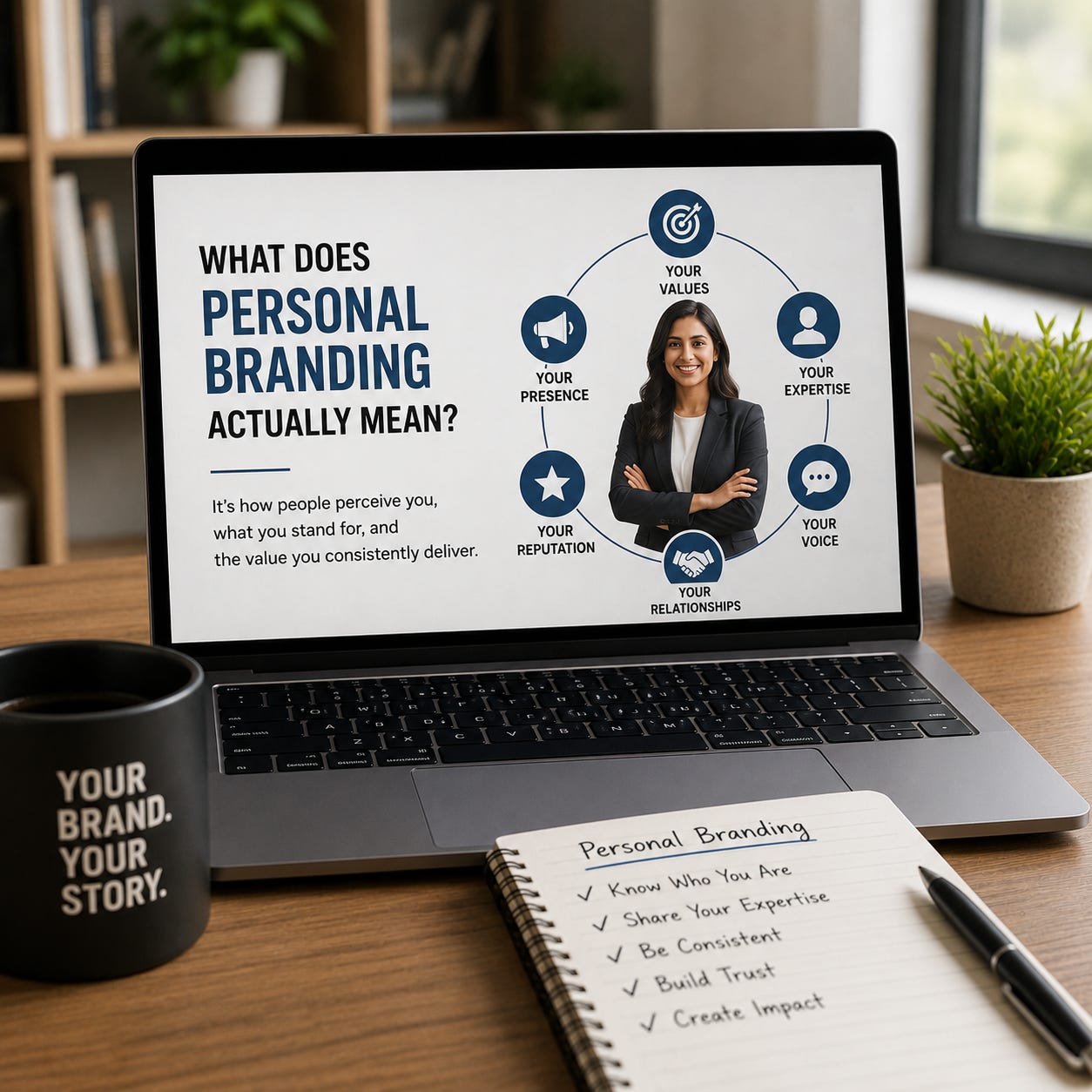
Let’s clear up the confusion first.
Personal branding is not:
Posting selfies every day
Being “influencer-famous”
Sharing your entire personal life online
Having a huge follower count
Personal branding is:
Being known for something specific
Having people trust your judgment in your field
Being remembered when opportunities come up
Standing out when someone compares you to others
Think about it this way: when someone needs advice on taxes, a name probably comes to mind. When someone needs a wedding photographer, another name pops up. That’s personal branding in action, and it works the same way whether you’re a student, an employee, or a freelancer.
The biggest misconception is that personal branding requires an “audience.” It doesn’t. It requires a reputation, and reputations are built one interaction, one piece of work, and one conversation at a time, long before an audience ever enters the picture.
Why You Don’t Need to Be “Online” to Start
Many people believe personal branding only happens on social media. That’s outdated thinking.
Your personal brand starts offline, through:
How you show up in meetings
The quality of your work
How you communicate with clients or colleagues
The reputation you build within your circle
Online presence just amplifies what’s already true about you. If you’re not online yet, that’s actually an advantage: you get to build your brand intentionally from day one, instead of cleaning up years of random, disconnected posts.
Think of your offline reputation as the foundation and your online presence as the megaphone. A megaphone with nothing worth saying doesn’t help anyone. But strong offline habits - showing up on time, delivering good work, following through on promises - combined with even a little online visibility, can move faster than either one alone.
This is also good news if you feel behind. You’re not starting from negative - you’re starting from whatever trust you’ve already earned in real life. Online branding just gives that trust a wider reach.
Step 1: Get Clear on Your “One Thing”
Before you post anywhere, answer this question:
“What do I want to be known for?”
Not five things. One thing.
Ask yourself:
What am I genuinely good at?
What do people already come to me for advice about?
What topic could I talk about for an hour without getting bored?
Examples of a clear “one thing”:
“I help small businesses set up their first website.”
“I simplify personal finance for beginners.”
“I teach people how to switch careers into tech.”
A specific focus makes you memorable. Trying to be “good at everything” makes you forgettable.
Quick exercise: Finish this sentence - “People come to me for help with ___.” Whatever fills that blank is a strong starting point for your personal brand focus. If nothing comes to mind immediately, ask three people close to you what they think you’re best at. Their answers are often more accurate than your own.
You can always expand later. But narrowing down first makes it far easier for people to remember what you do - and refer you when the right opportunity comes along.
Step 2: Audit What Already Exists About You
Before creating anything new, check what’s already out there.
Google your own name. If nothing comes up, you’re starting fresh, which means your first posts and profiles will shape the whole first impression.
Check your LinkedIn profile.
Look at any old social media accounts.
Think about how colleagues or clients would describe you today.
This step matters because your personal brand isn’t just what you say about yourself. It’s also what others find when they look you up. If your LinkedIn profile isn’t strong enough to catch a recruiter’s attention, that’s often the very first thing to fix, since it’s usually the top search result for your name.
While you’re auditing, make a note of any gaps:
Is your job title outdated?
Does your profile photo look unprofessional or outdated?
Is your bio empty or generic?
Are there old posts that don’t match how you want to be seen now?
You don’t need to fix everything today. Just get a clear picture of where you’re starting from, whether that’s an outdated presence to clean up or a starting point to build on.
Step 3: Build Your Foundation Before You Post
You don’t need to post on the day you decide to build a brand. First, build your foundation:
A. A Clear Bio
Write one or two lines that explain who you are and what you help with. Example:
“I help first-time job seekers build resumes that actually get interviews.”
B. A Professional Photo
Doesn’t need to be expensive. Just clear, well-lit, and recent.
C. One Central Profile
Pick one platform to be your “home base” - usually LinkedIn for professionals, Instagram for creators, or a simple personal website.
This foundation becomes one of your most valuable long-term assets. In fact, having a small set of owned digital assets - a profile, a portfolio, an email list - matters more than chasing every trend. Here’s a breakdown of digital assets worth building early that compound in value over time.
Step 4: Start Small - Consistency Beats Perfection
You don’t need a content calendar, a fancy camera, or witty captions to start.
Begin with:
One post a week sharing something you learned
One comment a day on posts related to your field
One conversation a week with someone in your industry
Small, consistent actions build more trust than one viral post ever will.
A Simple 90-Day Starting Plan
Week 1-2: Optimize your profile bio and photo
Week 3-6: Share what you’re learning - no need to sound like an expert yet
Week 7-10: Start engaging with others in your field daily
Week 11-13: Share small wins, lessons, or client results
If LinkedIn is your platform of choice, this step-by-step 90-day brand-building plan breaks this down in even more detail.
What to Post When You Have “Nothing” to Say?
This is where most beginners get stuck. You don’t need dramatic success stories or years of experience to create good content. Try these simple formats instead:
Lessons learned - “Here’s something I got wrong this week and what I’d do differently.”
Behind-the-scenes - Show your process, not just the finished result.
Questions you’re exploring - People engage more with curiosity than with polished answers.
Simple explainers - Break down a concept your audience finds confusing.
Small wins - A happy client, a completed project, a new skill learned.
None of these requires you to be an expert. They just require you to be honest and specific. In fact, being early in your journey is often more relatable than being a polished expert - people trust real progress more than perfect performance.
Step 5: Remember - Video and Search Are the New Word of Mouth
Text posts still matter, but people increasingly discover others through video and search - not just through traditional networking.
Short videos build familiarity faster than text.
Search engines (including social platforms) now function like discovery tools for people, not just brands.
A face and voice build trust faster than a wall of text ever can.
If you’re camera-shy, start with simple talking videos answering common questions in your field. You don’t need studio lighting -just clarity and consistency. Even a 30-second video filmed on your phone, answering one question your audience often asks, can do more for your brand than a week of text posts.
This shift is well explained by how social media and video have become the new search engines, which is worth understanding early so you’re not left behind. And once you’re comfortable, you don’t have to choose just one video format - comparing platforms like Instagram Reels vs YouTube Shorts can help you figure out where your specific audience actually spends their time.
Common Mistakes People Make When Starting
Waiting to feel “ready.” You’ll never feel 100% ready. Post before you feel confident, not after.
Copying someone else’s style. Your brand should sound like you, not a copy of an influencer you admire.
Trying every platform at once. Master one platform before expanding.
Disappearing after a few posts. Consistency over months builds trust — random bursts of activity don’t.
Overthinking the first post. Nobody remembers your first post. They remember your fiftieth.
What If You’re Still Employed or Not Freelancing Yet?
You don’t need to be a freelancer or business owner to build a personal brand. In fact, it can boost your career while you’re still employed.
It positions you for promotions and new opportunities.
It builds your professional reputation beyond your current company.
It creates options - in case you ever want to freelance, consult, or switch industries.
If you’re weighing your long-term path, understanding the real differences between freelancing, a job, and starting a business can help you decide how visible — and how public — you want your brand to be at this stage.
How Does This Help Your Career Long-Term?
A strong personal brand isn’t just about being “known.” It creates real, practical advantages:
More opportunities - People refer you when they know what you do.
Higher trust - Clients and employers take you more seriously.
Career flexibility - You’re not solely dependent on one company or job title.
Confidence - Speaking about your own work regularly builds clarity and self-assurance.
None of this requires you to become “internet famous.” It just requires you to be consistently visible in your area of expertise.
How to Stay Consistent When Motivation Fades?
The first two weeks of building a personal brand are exciting. Week six is where most people quit.
Here’s how to stay consistent even when motivation dips:
Batch your content. Write 3-4 posts in one sitting instead of starting from zero every day.
Lower the bar. A short, honest post beats a perfect post you never publish.
Track small signals. A comment, a message, a new connection - these are proof it’s working, even before big results show up.
Build it into your routine. Successful, visible professionals rarely rely on motivation alone - they rely on habits. Building small, repeatable habits into your week is a daily habit shared by successful entrepreneurs and marketers, and personal branding is no exception.
Remember: nobody builds a strong personal brand in a straight line. There will be weeks you post daily, and weeks you go quiet. What matters is returning to it consistently over months, not achieving perfection every single week.
You don’t need to be already online to build a personal brand. You need clarity on what you stand for, a simple foundation, and the willingness to show up consistently - even before anyone’s watching.
Start small:
Pick your “one thing”
Clean up your existing profiles.
Post once a week
Stay consistent for 90 days.
In six months, you won’t recognize how far you’ve come — and neither will the people who once didn’t know your name.
Your personal brand isn’t built overnight. But it starts the moment you decide to stop waiting.